Decide when you want to bake, choose a maintenance method appropriate to that routine, and keep the amount of starter manageable. An established starter stored cold needs a different routine from one kept at room temperature.
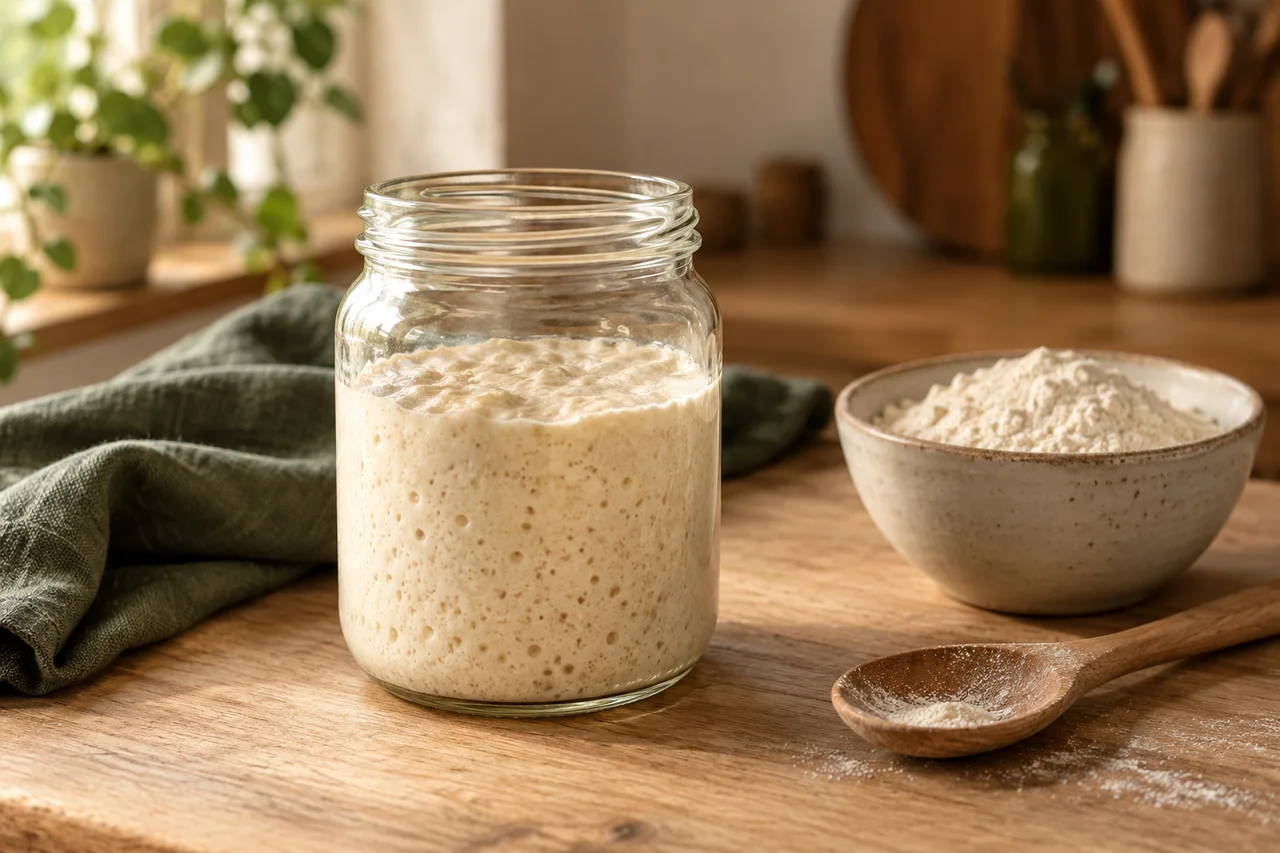
Start with an established culture
This guide is about maintenance, not creating a culture from flour and water. If yours is new or has never shown repeatable activity after feeding, begin with the starter guide.
King Arthur’s maintenance guide describes room-temperature feeding and refrigerator storage. Use its method as a complete reference rather than treating a refrigerator interval as a guarantee for every jar and kitchen.
Separate keeping from preparing
Maintaining a small culture and preparing enough ripe starter for a recipe are two separate jobs. First check how much the recipe needs, then plan the build while retaining enough culture for future baking.
Write down the amount you intend to retain before pouring starter into a mixing bowl. This prevents an avoidable problem: using the entire culture in one loaf. A label on the jar is often more helpful than another reminder app.
Use a repeatable note
- Storage: counter or refrigerator, with the date it went in.
- Feeding: seed, flour, and water weights, in that order.
- Observation: height after feeding and the highest level observed.
- Next use: recipe name and starter amount required.
Do not change your flour and feeding ratio at the same time while investigating a slowdown. You will have a clearer comparison if one variable remains stable.
Before baking after cold storage
Check the starter’s condition, refresh it according to your maintenance method, and observe its response. A calendar reminder can tell you when to check a jar; it cannot tell you whether that culture meets your recipe’s needs.
For feeding arithmetic and spoilage cautions, return to the starter reference. For dough planning, continue to bulk fermentation.
Sources & scope
Source-based explanation and editorial checklists by SourdoughStart, operated by Tag Ad Limited. AI-assisted article revised 2026-10-12. Source links are not endorsements.
Revision note: prepared for the new reference-led edition. Suggest a correction.