Begin with one complete recipe from an established baking source, a starter whose behavior you have observed, and enough time to follow the whole process. Use this guide to prepare; it is not a stand-alone bread recipe.
Choose one recipe, not five methods
It is tempting to combine a popular ingredient list, a different folding schedule, and somebody else’s overnight proof. Those instructions may assume different flour, starter quantities, temperatures, or loaf sizes. Start with one method and keep its measurements and sequence together.
Read the recipe from beginning to end before feeding the starter. Note any instructions that require an overnight wait, preheated cookware, or several hours at home. King Arthur’s sourdough baking guide is one clearly documented option; its individual recipes differ, so follow the recipe you actually choose.
Prepare the essentials
- A scale that reads in grams; weigh into a bowl with the scale tared.
- The flour specified by the recipe, rather than an unplanned substitution.
- A mixing bowl, a dough scraper, and a way to cover the dough.
- Suitable baking equipment used within its manufacturer’s temperature limits.
- A place to write down ingredient weights, timings, and observations.
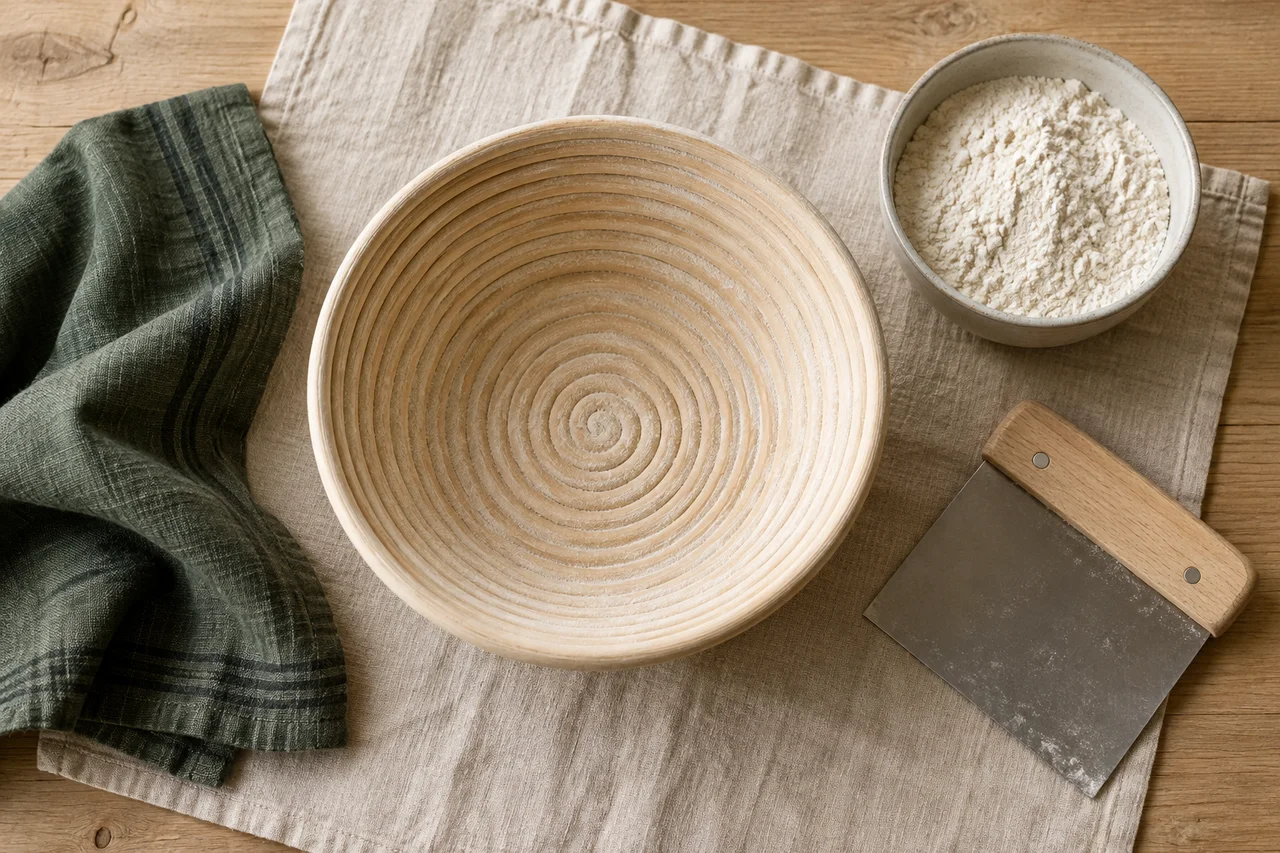
Specialty baskets and scoring tools can be useful, but buying accessories does not replace a reliable process. Check what the recipe actually requires before purchasing anything.
Map the day in stages
Write down the sequence: starter preparation, mixing, dough development, bulk fermentation, shaping, final proof, baking, and cooling. The two rising periods are different stages, not interchangeable blocks of waiting time.
For each stage, record both the planned start time and the observation that tells you to move on. A schedule is useful for planning; it is not proof that dough is ready. If your chosen recipe’s temperature differs from your kitchen, expect its timing to need attention.
Make the first bake easy to learn from
Keep your first set of notes short: flour brand, ingredient weights, room or dough temperature if measured, the starter’s last feeding, and a photo or description at the end of bulk. After the loaf cools, describe the result in plain language.
For the second bake, change one thing that addresses a specific problem. A wet interior, a spreading dough, and a dark crust are different observations. Changing flour, water, starter amount, and timing together makes it difficult to know what helped.
Where to go next
Use the starter guide if you do not yet have a predictable culture. Read bulk fermentation before scheduling the dough, or use the troubleshooting index after a disappointing bake.
Sources & scope
Source-based explanation and editorial checklists by SourdoughStart, operated by Tag Ad Limited. AI-assisted article revised 2026-10-12. Source links are not endorsements.
Revision note: prepared for the new reference-led edition. Suggest a correction.