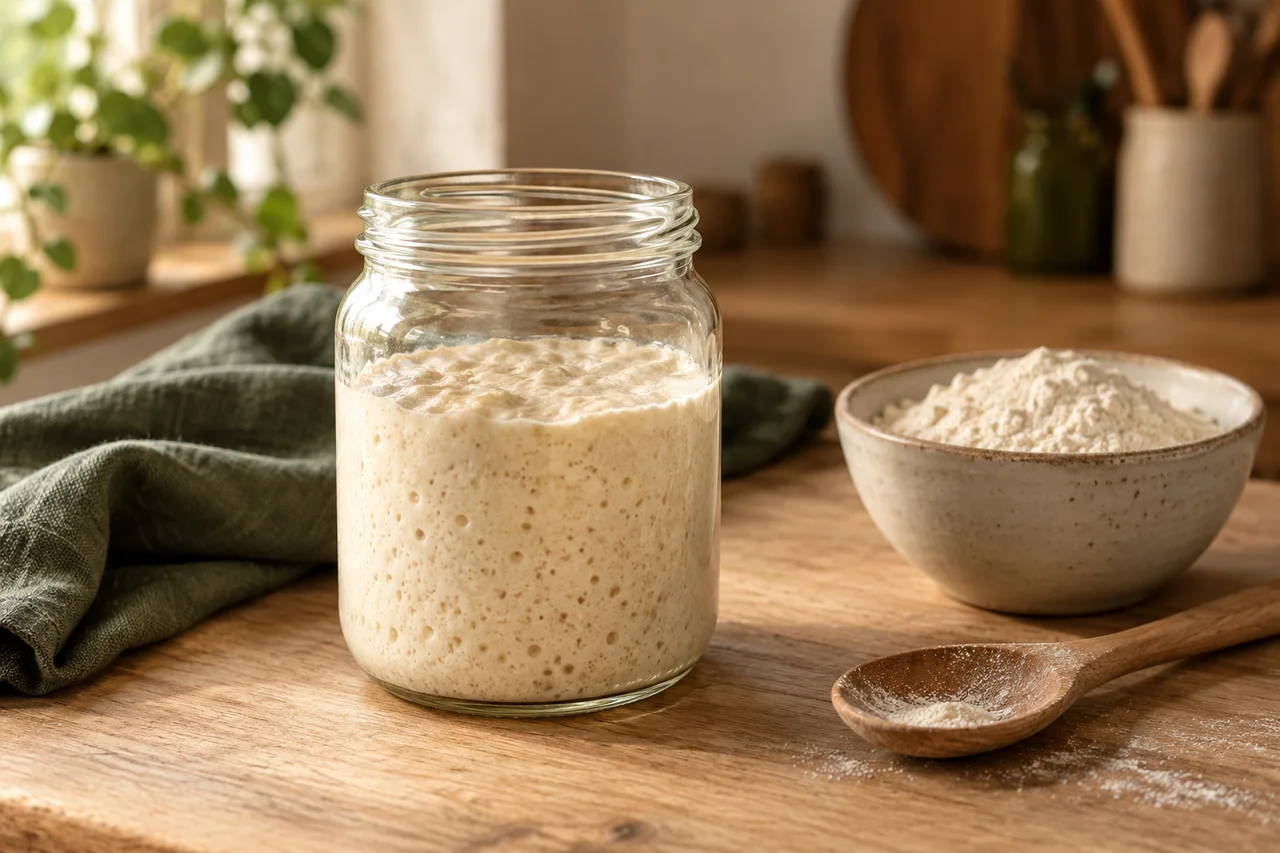
A starter is a maintained culture of flour, water, yeasts, and bacteria. If you are starting from scratch, follow a complete starter-building method. Once established, observe how it responds to feeding instead of judging it by a single bubble or a fixed birthday.
New starter or established starter?
These are different situations. A new flour-and-water mixture is still developing; an established starter is being refreshed for ongoing use. Do not use a maintenance schedule as a promise that a new culture will be ready for bread on a particular day.
King Arthur’s starter-creation guide provides a complete starting method. Keep notes on the flour, feeding time, and rise after feeding. Consistent observations are more useful than comparing your jar to a photograph of someone else’s.
Read a feeding ratio by weight
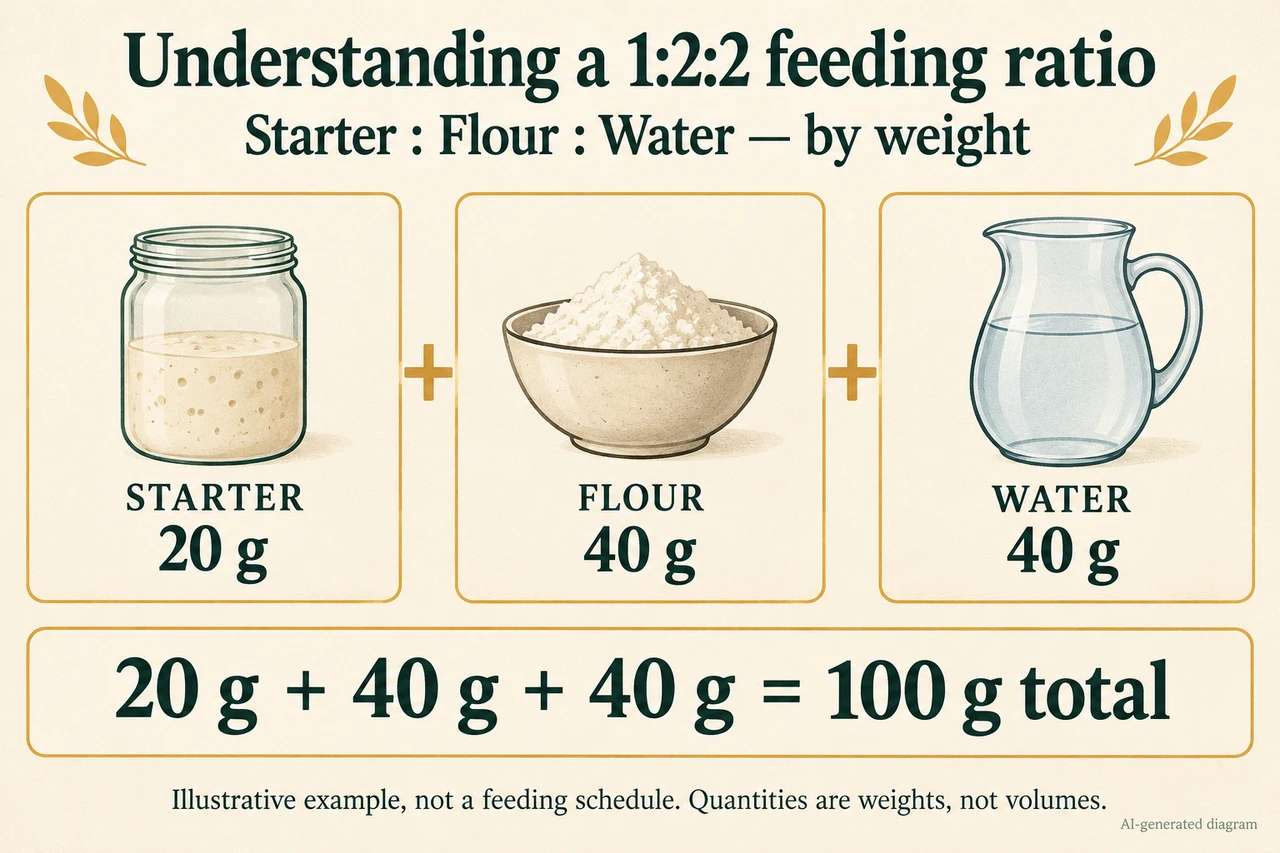
The order used here is starter : fresh flour : fresh water. A 1:2:2 feeding can mean 20 g starter, 40 g flour, and 40 g water: 100 g total. It does not mean equal spoonfuls.
Keeping the same 20 g seed but using 1:5:5 gives 20 + 100 + 100 = 220 g. That is more fresh food per gram of seed, not the same food spread more thinly. The ratio alone does not specify when the starter will peak.
Observe the whole cycle
Mark the level after mixing. At several convenient points, note how high it rises, whether the top remains domed, and when it begins to recede. Use a jar with enough headroom and a cover appropriate for fermentation.
The float test is not a pass/fail test of baking readiness. Trapped gas, handling, and consistency can affect the result. King Arthur’s discussion shows why a floating sample should not replace an observed feeding cycle.
Before planning a loaf, compare the starter requirements of your selected recipe with what your culture is doing. A recipe calling for ripe starter assumes more than a few isolated bubbles.
Keep safety separate from performance
A vigorous rise does not certify food safety. Discard a starter with mold, pink or orange discoloration, or a putrid smell; do not scrape off a suspicious layer and keep baking. If you cannot confidently identify a concerning change, start again rather than relying on an online photo diagnosis.
Flour is a raw food. Do not taste raw starter, dough, or batter. Wash hands and clean utensils and surfaces after handling them. These precautions also apply to children helping in the kitchen.
A useful starter note
Write one line per feeding: “20 g seed + 40 g flour + 40 g water; fed at 8 a.m.; room temperature recorded; maximum observed height at ___.” Leave the peak time blank until you see it. This small record helps distinguish a genuine change from a different feeding setup.
Next: build a maintenance routine or prepare for your first loaf.
Sources & scope
- King Arthur Baking: creating a starter
- King Arthur Baking: feeding-ratio baking trials
- King Arthur Baking: limits of the float test
- King Arthur Baking: sourdough questions and starter spoilage
- FDA: flour is a raw food
Source-based explanation and editorial checklists by SourdoughStart, operated by Tag Ad Limited. AI-assisted article revised 2026-10-12. Source links are not endorsements.
Revision note: prepared for the new reference-led edition. Suggest a correction.