Stickiness is an observation, not a diagnosis. First ask when the problem appeared: immediately after mixing, during folds, or late in fermentation. That timing helps you choose a useful next step instead of repeatedly adding flour.
Locate the problem in the process
| What you notice | What to check | A useful next step |
|---|---|---|
| Shaggy and sticky straight after mixing | Whether the recipe includes a rest and folds | Complete its next development step before changing the formula. |
| Coherent dough sticks mainly to your hands | Handling method | Use a scraper and lightly moisten hands as appropriate. |
| Very loose from the beginning | Recorded flour, water, and starter weights | Check the arithmetic and flour substitution before the next bake. |
| Initially stronger, then increasingly slack | Fermentation history and temperature | Review the process rather than assuming it needs more folds. |
These are prompts for investigation, not proof of a single cause. Two problems can occur in the same batch.
Handling is not the same as changing the recipe
High-hydration dough can be difficult to handle even when the formula is intentional. King Arthur’s handling guide emphasizes technique, including moist hands and dough development, rather than expecting wet dough to behave like a firm sandwich dough.
Use a scraper to lift and move dough. Do not pour unmeasured water onto the work surface as a substitute for handling technique, and do not keep adding flour simply to make your hands feel dry. Either choice changes what you are evaluating.
Check what went into the bowl
Compare your written ingredient weights with the recipe. Include the flour and water carried by the starter when comparing total hydration. If you changed the flour, record that too: an identical percentage does not mean identical handling.
The hydration reference and calculator makes the arithmetic visible. Its result is a ratio, not a verdict on whether your dough is good.
Make the next bake a fair comparison
Keep the recipe and flour constant. Select one change that matches your observation: better handling, more accurate weighing, or closer monitoring of fermentation. Write the change down before starting.
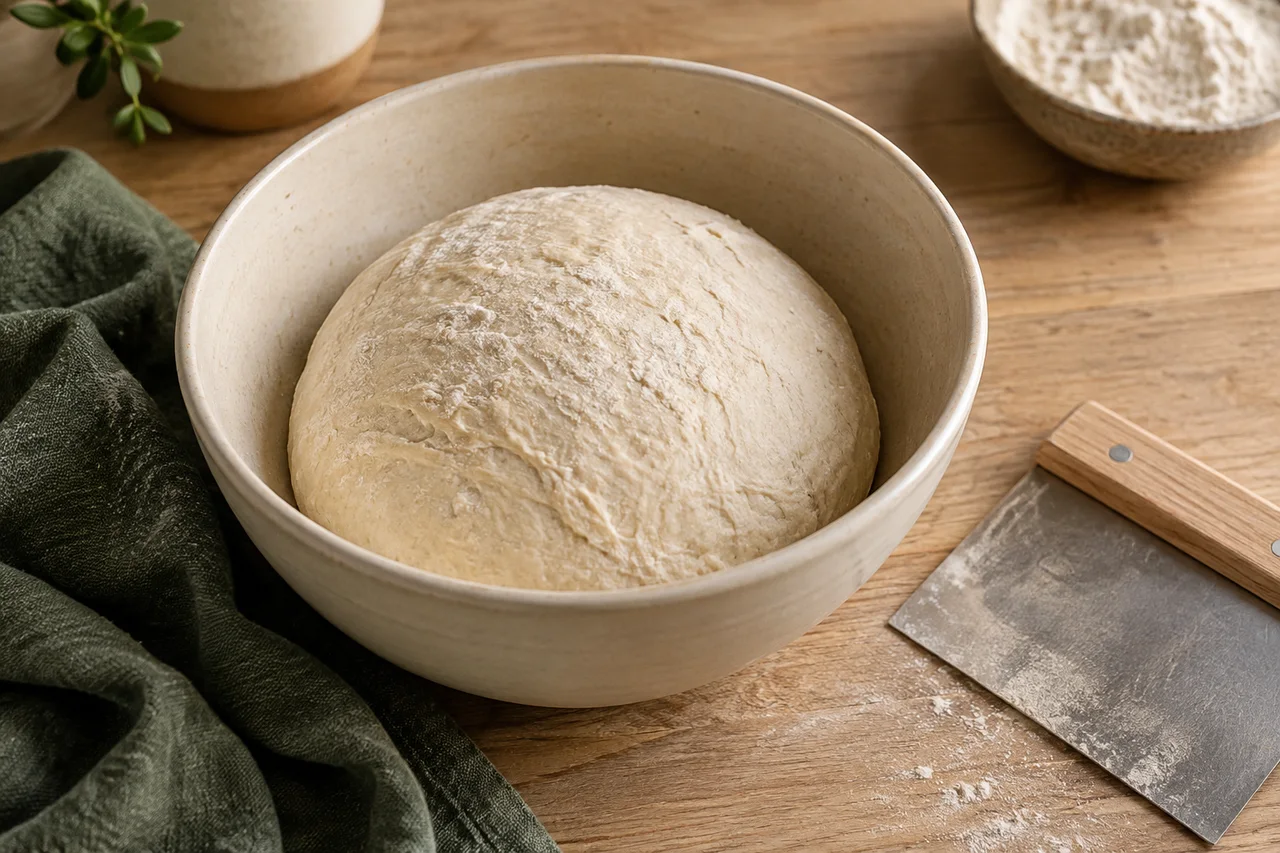
If the dough became fragile only after a long warm period, read the fermentation guide. A photograph of sticky dough alone cannot establish that it is overproofed.
Sources & scope
- King Arthur Baking: working with high-hydration dough
- King Arthur Baking: how to tell if dough has risen enough
Source-based explanation and editorial checklists by SourdoughStart, operated by Tag Ad Limited. AI-assisted article revised 2026-10-12. Source links are not endorsements.
Revision note: prepared for the new reference-led edition. Suggest a correction.