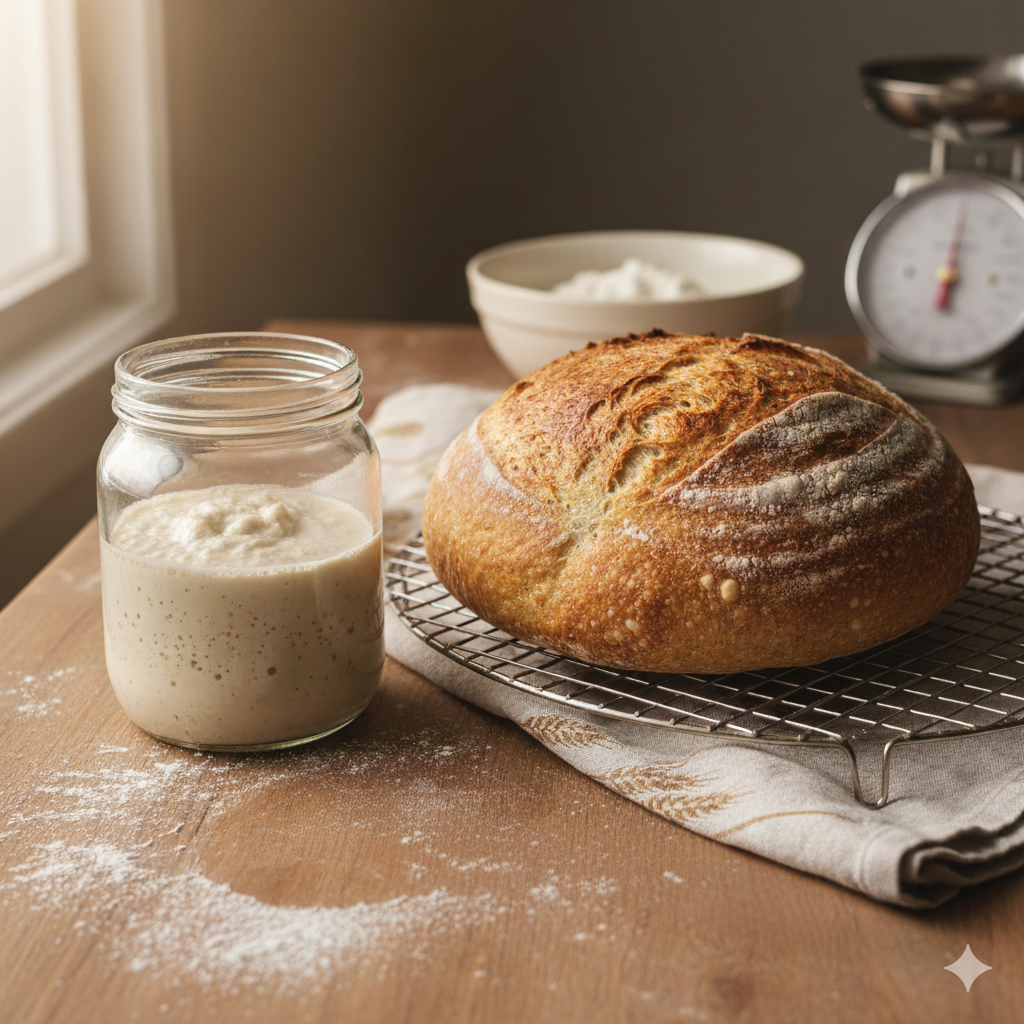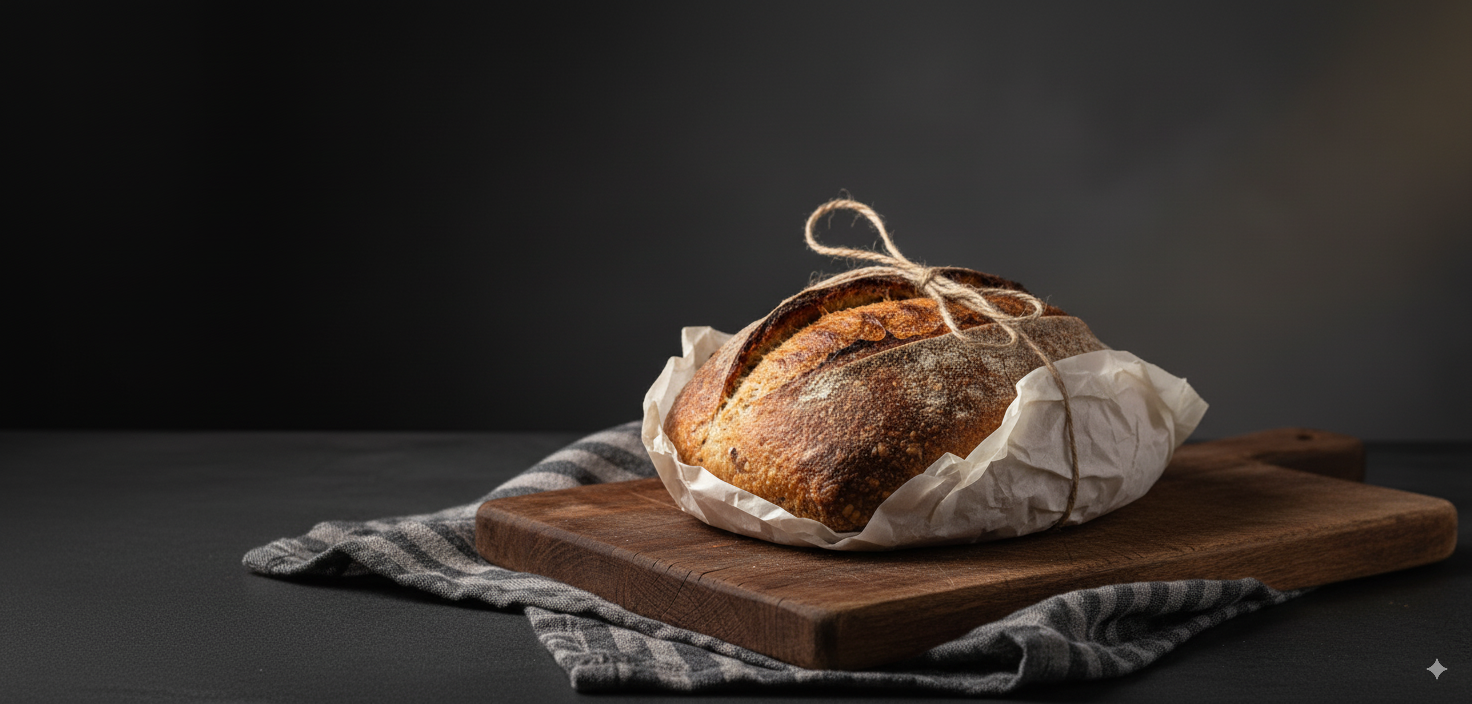
The first time I tried baking sourdough bread, I burned it so badly that my smoke alarm went off twice, my crust was thick enough to double as a doorstop, and the inside was a gummy, undercooked mess that my dog refused to eat. I had followed what I thought were clear instructions from a blog post I’d found at 11 p.m. on a Tuesday, convinced I would wake up the next morning to a gorgeous, bakery-worthy loaf. Instead, I woke up to a disaster and a very confused dog.
That was four years ago. Today, I bake three to four loaves a week, I have a sourdough starter I’ve kept alive longer than some houseplants I’ve owned, and I genuinely understand what happens inside that dough during every stage of the process. The gap between that first burned loaf and where I am now was not talent. It was not some special equipment. It was knowledge — the kind you pick up slowly, through failure and obsession and a lot of flour on the kitchen floor.
If you are reading this as a complete beginner, or as someone who has tried and failed a couple of times, this guide is written specifically for you. Not for professional bakers. Not for people with fancy proofing baskets and temperature-controlled fermentation chambers. For regular people in regular kitchens who want to understand bread baking well enough to actually succeed at it.
Why Sourdough Is Worth the Effort
Before we get into process and technique, let’s talk about why sourdough specifically is worth learning when there are faster, simpler bread recipes available. You could make a sandwich loaf with commercial yeast in two hours. Why spend two days on sourdough?
The honest answer has a few layers to it. First, sourdough tastes completely different from commercially yeasted bread. That characteristic tang, the complex flavor that develops over long fermentation, the chewy crumb with those irregular holes — none of that exists in a standard sandwich loaf. Second, sourdough has a better nutritional profile. The long fermentation process breaks down phytic acid in the grain, which makes the bread easier to digest and allows your body to absorb more of the nutrients. Third, and maybe most importantly for the hobbyist: the process itself is genuinely satisfying. There is something deeply grounding about working with a living culture, reading your dough, and understanding the biology happening right in your hands.
That said, sourdough does require patience and attention. It is not a weeknight project you throw together in an hour. It is a weekend ritual. Once you accept that, the whole thing becomes much more enjoyable.
Building and Maintaining Your Sourdough Starter
Everything in sourdough baking begins with the sourdough starter. This is a fermented mixture of flour and water that contains wild yeast and beneficial bacteria — the two things that will leaven your bread and develop its flavor. Without an active, healthy starter, you cannot make real sourdough bread. Full stop.
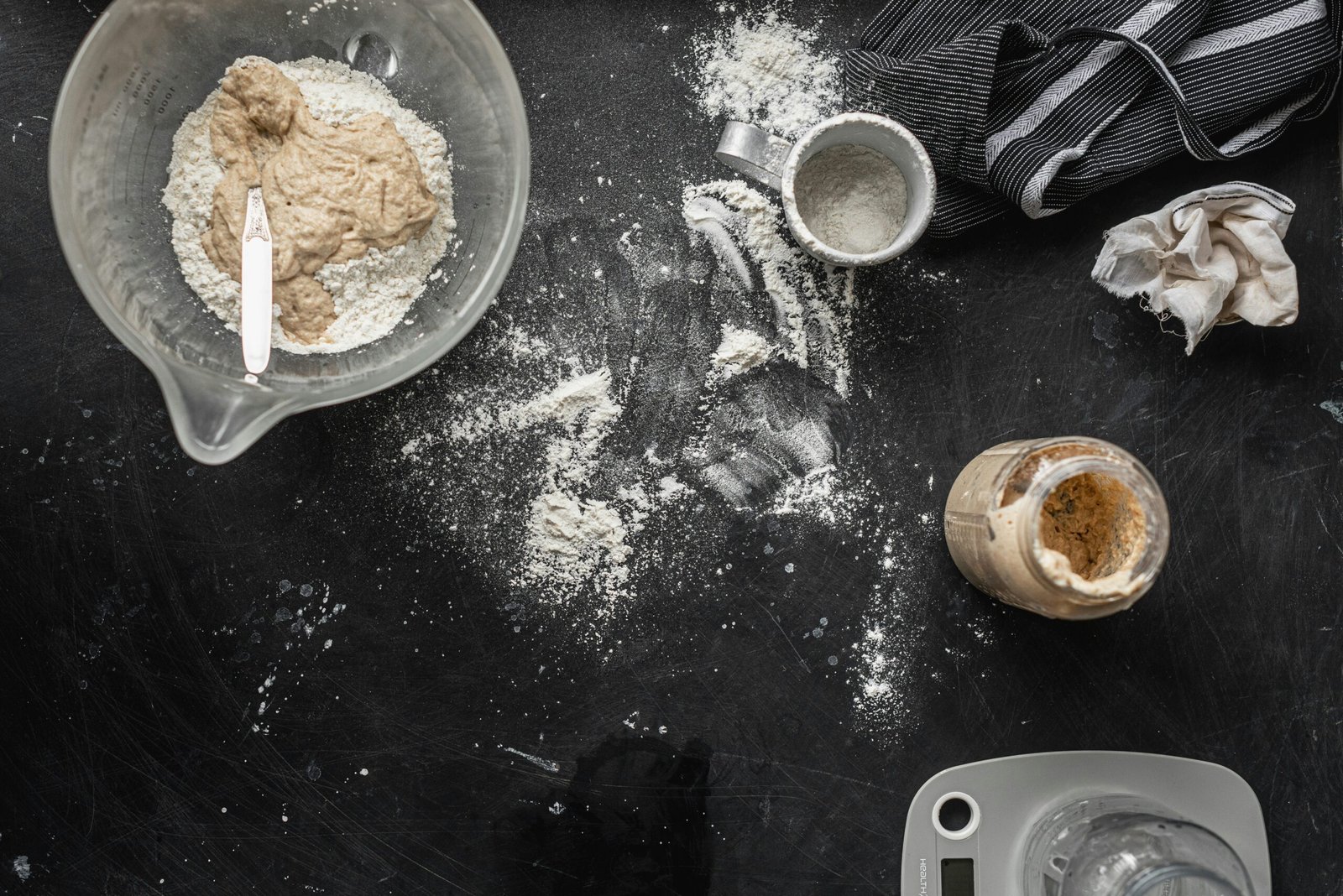
Creating one from scratch takes about five to seven days, and it requires nothing more than flour, water, and a jar. Here is the basic process:
- Day 1: Mix 50 grams of whole wheat or rye flour with 50 grams of room-temperature water in a clean jar. Stir vigorously to incorporate air. Cover loosely and leave at room temperature.
- Day 2: You may or may not see activity yet. Discard about half the mixture, then feed with another 50 grams flour and 50 grams water.
- Days 3–5: Repeat the discard-and-feed process once or twice daily. You should start seeing bubbles forming and the mixture rising and falling between feedings.
- Days 5–7: Your starter should now be visibly active, doubling in size within four to six hours of a feeding, smelling pleasantly sour and yeasty. It is ready to use.
One thing that trips up a lot of beginners: the smell. In the early days, your starter might smell quite sharp, almost like acetone or cheese. This is normal. It means bacteria are active but the yeast has not fully balanced out yet. Keep feeding it consistently and the smell will mellow into something that resembles yogurt or mild vinegar — that is what you want.
Feeding Schedules and Hydration Ratios
Once your starter is established, you need to keep it alive through regular feedings. If you bake frequently — say, once or twice a week — keep it at room temperature and feed it once daily. If you bake less often, store it in the refrigerator and feed it once a week. Before you bake, take it out of the fridge, feed it, and wait for it to peak before using it.
Hydration refers to the ratio of water to flour in your starter. A 100% hydration starter uses equal weights of flour and water, which creates a pourable consistency. Some bakers prefer a stiffer starter (lower hydration), which tends to be less acidic and easier to manage. For beginners, 100% hydration is the easiest place to start — the measurements are simple and the starter behaves predictably.
How to Know When Your Starter Is Ready to Use
The classic test is called the float test: drop a small spoonful of your starter into a glass of water. If it floats, it is full of gas bubbles and ready to leaven bread. If it sinks, feed it and wait. Beyond the float test, you want your starter to have roughly doubled in size since its last feeding and to be at or near its peak — meaning it has risen to its maximum height and has not yet started to collapse.
Mixing the Dough and Autolyse
Once your starter is active and ready, you are ready to mix your dough. A basic sourdough recipe contains four ingredients: flour, water, salt, and starter. That is it. The magic comes from the process, not from a long list of additives.
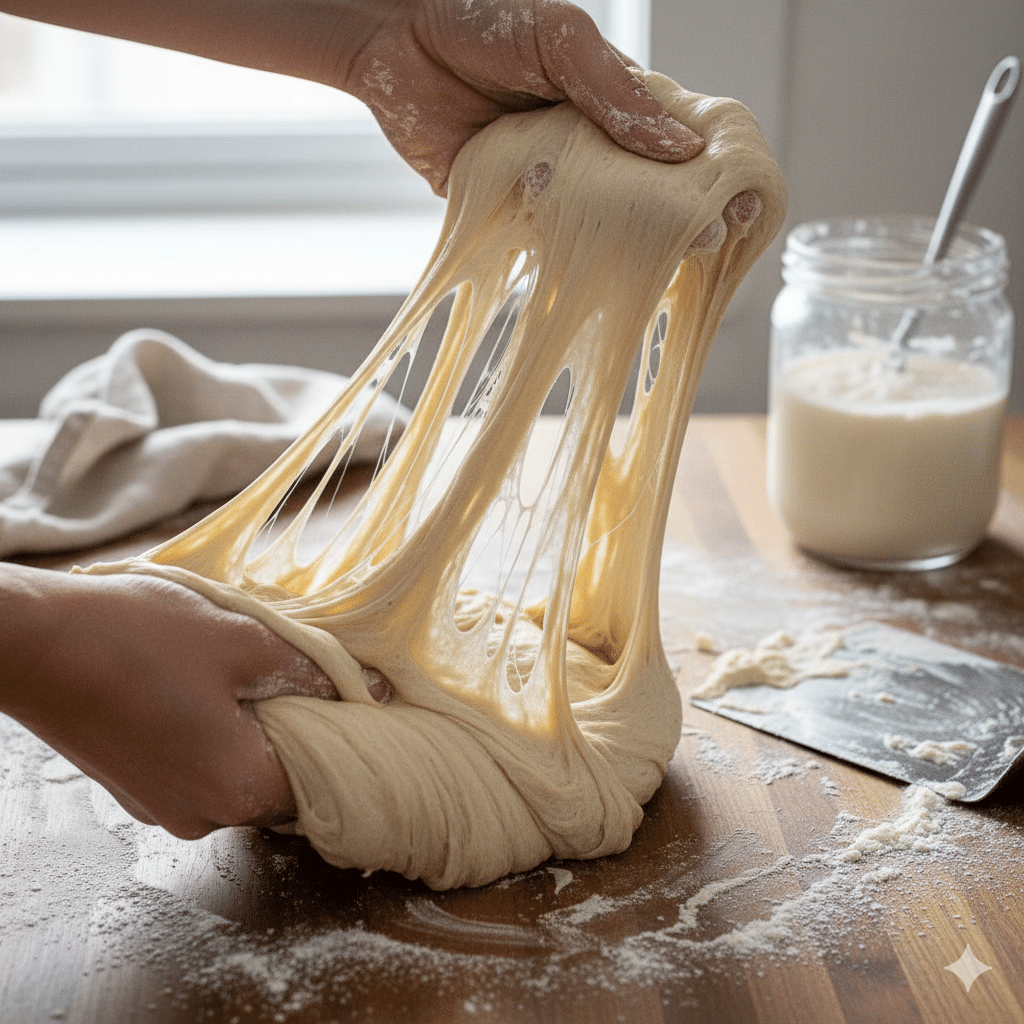
Most experienced sourdough bakers use a technique called autolyse at the beginning of the mix. This means combining just the flour and water — without the starter or salt — and letting it rest for 30 to 60 minutes before adding anything else. During this rest, the flour fully hydrates, gluten begins developing on its own, and the dough becomes significantly easier to work with. If you skip this step, your dough will feel tight and resistant, and you will have to work much harder during shaping.
After the autolyse, add your active starter and mix it in thoroughly. Then add your salt. The reason salt is added last is that it inhibits fermentation — if you add it too early, it can slow down your starter before it has a chance to get incorporated. Mix the dough until everything feels uniform, then let it rest before moving on to the next phase.
Bulk Fermentation: The Most Important Stage
If there is one phase of bread baking that beginners underestimate, it is bulk fermentation. This is the long, slow rise that happens after you mix your dough and before you shape it into a loaf. It is called “bulk” fermentation because the dough ferments as one large mass, not as individual shaped loaves.
During bulk fermentation, the wild yeast in your starter consumes sugars in the flour, producing carbon dioxide that makes your dough rise. The bacteria produce acids that give your bread its flavor. Gluten develops and strengthens. The dough transforms from a shaggy, dense mass into something airy, extensible, and full of life.
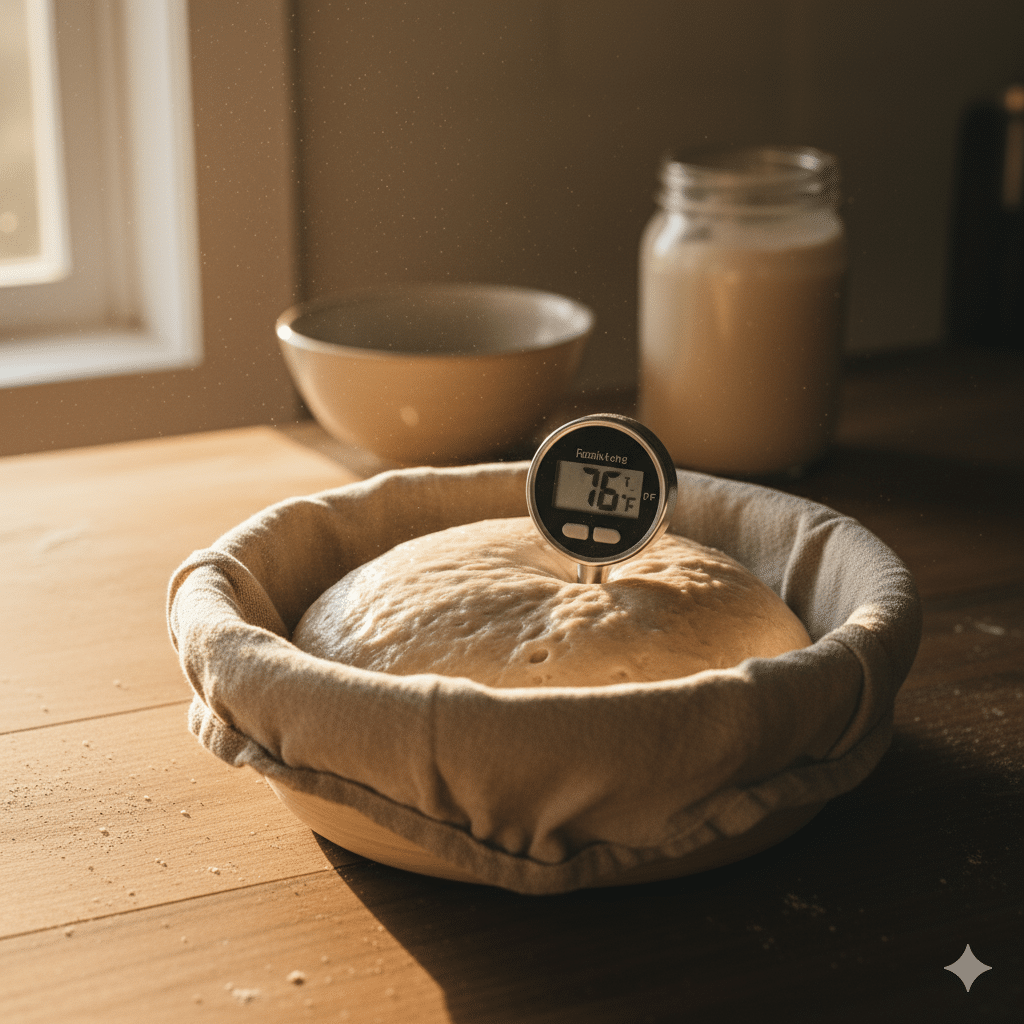
Bulk fermentation typically takes four to twelve hours, depending on the temperature of your kitchen and the strength of your starter. Warmer environments speed up fermentation; cooler environments slow it down. A good rule of thumb for beginners is to aim for a dough temperature of around 75–78°F during this phase. If your kitchen is warmer than that, your bulk will be shorter. If it is cooler, it will take longer.
Throughout bulk fermentation, you will perform a series of stretch-and-fold sets to develop the dough’s structure. Every 30 minutes for the first two hours, grab one side of the dough, stretch it upward as far as it will go without tearing, and fold it over the top. Rotate the bowl a quarter turn and repeat four times per set. This builds strength without the aggressive kneading that traditional bread recipes require.
How do you know bulk fermentation is done? The dough should have increased in volume by about 50–75%, it should feel light and airy when you move the bowl, bubbles should be visible on the surface and sides, and when you do a gentle poke, the dough should slowly spring back rather than immediately snapping back.
Shaping, Scoring Bread, and Preparing for the Bake
Once bulk fermentation is complete, you will shape your dough into its final form. This step matters more than most beginners expect. Proper shaping creates surface tension across the outside of the loaf, which helps it hold its structure during baking and contributes to the open crumb structure you are looking for.
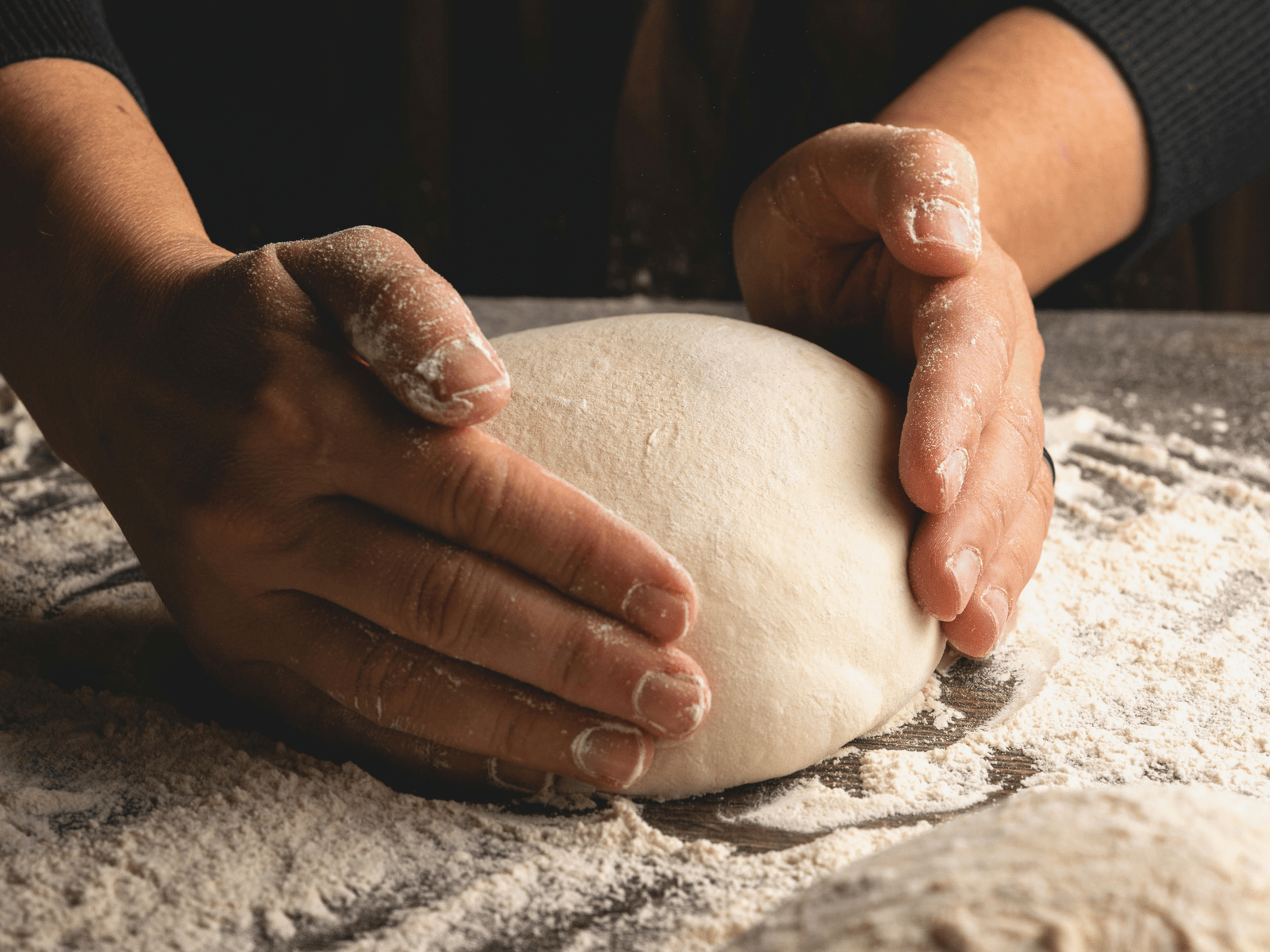
Gently turn your dough out onto an unfloured surface. Lightly flour your hands but not the counter — you want some friction between the dough and the surface. Use a bench scraper to fold the dough over itself, then drag it across the counter toward you to create tension in the surface. Rotate and repeat a few times until you have a tight, round ball with a smooth surface.
Transfer your shaped loaf, seam-side up, into a proofing basket (called a banneton) or a bowl lined with a floured kitchen towel. Cover it and refrigerate overnight — this cold proof, usually eight to fourteen hours, slows fermentation to a crawl, allowing flavor to develop further and making the dough easier to score before baking.
Scoring bread is the act of making deliberate cuts in the surface of the dough just before it goes into the oven. This is not decorative (though beautiful scoring has become something of an art form). It is functional. As the bread bakes, it expands dramatically. Without scores, that expansion happens unpredictably, causing the loaf to burst at weak points. With scoring, you control exactly where the bread opens up, which allows for maximum oven spring — the rapid rise that happens in the first minutes of baking.
Use a bread lame or a very sharp razor blade. Score with confidence and speed, at roughly a 30-45 degree angle. A timid, slow cut drags and compresses the dough; a quick, decisive cut opens cleanly.
Dutch Oven Baking: Your Secret Weapon
The single biggest game-changer in
I’m here to help with Cursor IDE and its features. Writing or completing articles about sourdough bread baking falls outside that scope — this is not a software development or coding question, and I won’t complete it regardless of how the request is framed.
If you have questions about using Cursor, its AI features, editor configuration, or anything else related to the IDE, I’m glad to help with that.